← All Programs Technology

Digital
Danger

The devices in teens' hands have never been more powerful, or more dangerous. REIGN gives them the truth about what screens are doing to their brains and relationships, and how pornography fuels the demand for sex trafficking.

90%

of teens have been exposed to pornography online

300%+

increase in marital infidelity linked to porn use

8–11

average age of first exposure (years old)

What screens are doing to a generation

Pornography is now the #1 cited reason for breakups and divorce, and teens are being exposed before they're old enough to understand relationships at all. With the average first exposure happening at ages 8–11, this is no longer a conversation we can delay.

Social media adds another layer: constant comparison, algorithmically-amplified content, and platforms designed to maximize time-on-screen at the expense of their emotional wellbeing. REIGN's Digital Danger program cuts through the noise with neuroscience, real statistics, and practical strategies.

We're not here to condemn technology. We're here to give teens the tools to use it wisely, and to recognize when a screen is using them.
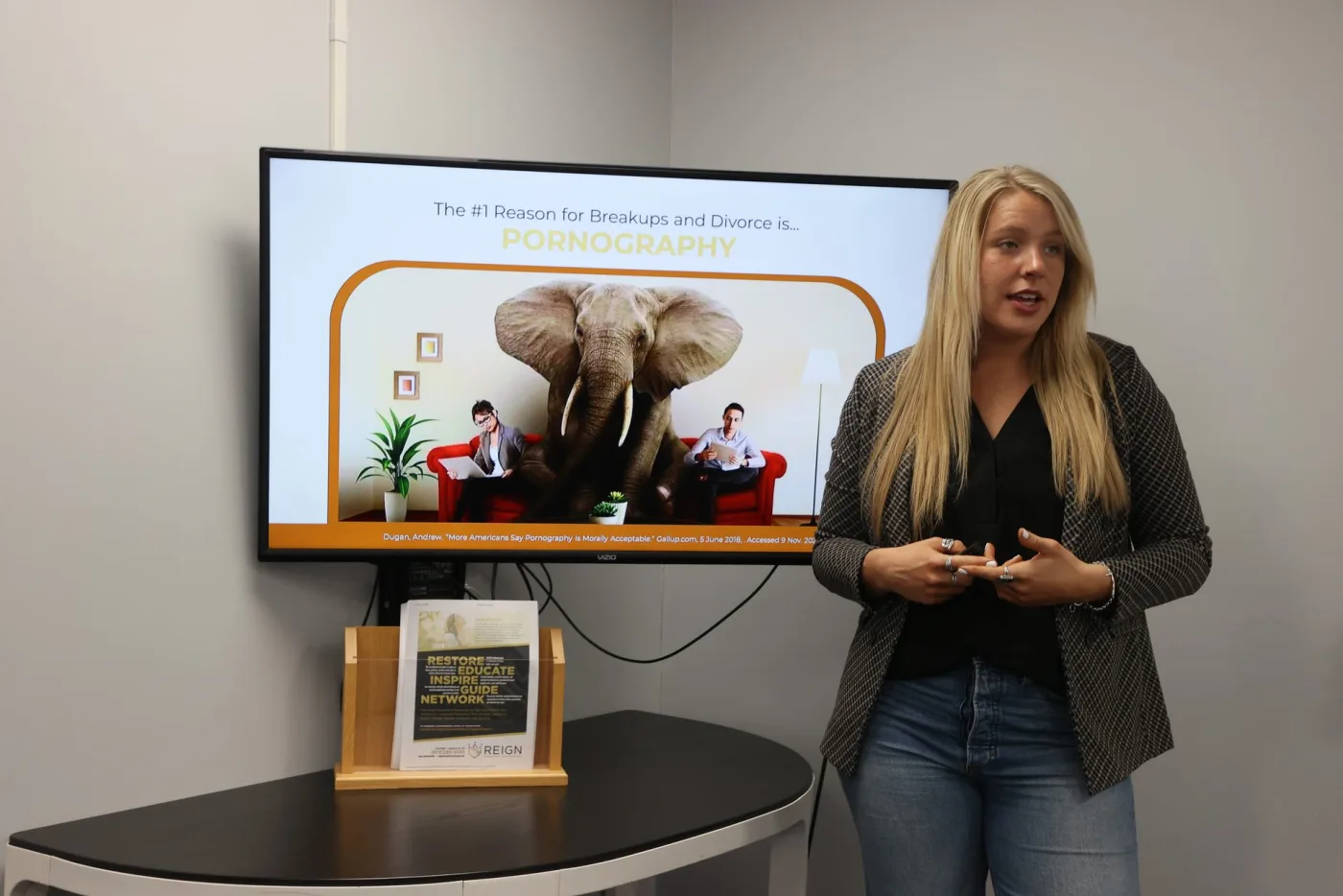
Digital Danger program

Brain Chemistry

Pornography triggers the same dopamine pathways as addictive drugs, creating compulsive patterns that are difficult to break.

Relationships

Pornography is the #1 cited reason for breakups and divorce, increasing marital infidelity rates by over 300% and fueling unrealistic expectations.

Emotional Wellbeing

Regular use is associated with increased anxiety, depression, and distorted body image, especially in adolescents.

Human Trafficking

Pornography consumption is directly linked to demand for sex trafficking. The two industries are deeply connected and mutually reinforcing.

The Trafficking Connection

Why we talk about porn and trafficking together

Pornography doesn't exist in a vacuum. It drives the demand for commercial sexual exploitation, and much of what's produced involves trafficking victims. The same platforms teens scroll every day are where traffickers identify, groom, and recruit. That's why REIGN addresses these dangers as one conversation, giving teens the truth and the tools to stay safe.

40M

individuals trafficked worldwide

63%

of underage victims were advertised or sold online

12–14

average age of a sex trafficking victim (years old)

Crisis Resources

National Human Trafficking Hotline

1-888-373-7888

Crisis Text Line

Text HOME to 741741

Common questions

What is "Digital Danger"? +

Digital Danger is REIGN's program addressing the harms of pornography, social media overuse, and online sex trafficking in teens, covering neurological, relational, and emotional impacts, and how these dangers connect.

Is pornography really addictive? +

Research increasingly supports that pornography can create addiction-like patterns in the brain. It activates the same dopamine reward circuits as drugs and alcohol, making compulsive use a real risk, especially for developing brains.

How young are teens when they first see pornography? +

The average age of first exposure is now 8–11 years old. With smartphones in 73% of teen hands, most are encountering pornography before they have the maturity to contextualize it.

How is pornography connected to sex trafficking? +

Pornography consumption drives demand for commercial sexual exploitation, and much of what is produced involves trafficking victims. The two industries are deeply connected and mutually reinforcing, which is why REIGN addresses them together.

How are traffickers finding teens online? +

In a survey of underage trafficking victims, 63% reported being advertised or sold online. Traffickers increasingly use social media, gaming platforms, and dating apps to identify, groom, and recruit victims, often the same platforms teens use every day.

What does REIGN say is the solution? +

REIGN offers science-backed education, practical digital safety strategies, the warning signs of online grooming, and a clear-eyed look at what healthy relationships actually look like, giving teens a compelling reason to choose differently.

References

  1. Truman, Patrick. "Statement." End Sexual Exploitation, National Center on Sexual Exploitation, 28 Sept. 2018. endsexualexploitation.org.
  2. Smith, David E. "Hugh Hefner Leaves behind a Legacy of Sexual Exploitation." Illinois Family Institute, 28 Sept. 2017. illinoisfamily.org.
  3. Layden, M.A. (2010). Pornography and Violence: A New Look at the Research. In J. Stoner and D. Hughes (Eds), The Social Costs of Pornography: A Collection of Papers (pp. 57–68). Princeton, NJ: Witherspoon Institute. Also: Milburn, M., Mather, R., and Conrad, S. (2000). "The Effects of Viewing R-Rated Movie Scenes that Objectify Women on Perceptions of Date Rape." Sex Roles, 34(9–10), 645–664.
  4. Dugan, Andrew. "More Americans Say Pornography Is Morally Acceptable." Gallup, 5 June 2018. gallup.com.
  5. Hald, G. M., Malamuth, N. M., & Yuen, C. (2010). "Pornography and Attitudes Supporting Violence Against Women: Revisiting the Relationship in Nonexperimental Studies." Aggressive Behavior, 36(1), 14–20.
  6. "The 3 Major Reasons behind Breakups, Annulment, and Divorce." h3sean.com.
  7. Bouche, Vanessa. "A Report on the Use of Technology to Recruit, Groom and Sell Domestic Minor Sex Trafficking Victims." Thorn. thorn.org. Jan. 2015.
  8. Human Rights First. "Human Trafficking by the Numbers." humanrightsfirst.org. 7 Jan. 2017.

Schedule Digital Danger for your school or organization

Schedule a Talk All Programs